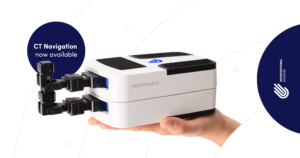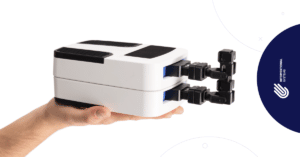

Micromate™ arrives in China alongside Ningbo Hicren, accelerating its market reach
The miniature medical intervention robot will bring ease of use and high accuracy to the Chinese operating rooms in a partnership with the innovative Chinese

The miniature medical intervention robot will bring ease of use and high accuracy to the Chinese operating rooms in a partnership with the innovative Chinese

Read here our input on the most recent guidelines for interventional oncology, and how Micromate™ brings value to this subspecialty.

Learn why building Micromate™ with a user-friendly approach in mind turned it into the most seamless robot to join the Operating Room.

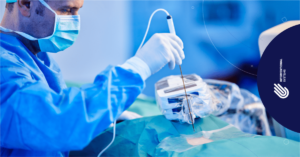
Learn how Micromate™ helped the clinical team at St. Antonius Hospital achieve submillimeter accuracy during a parotid gland biopsy.

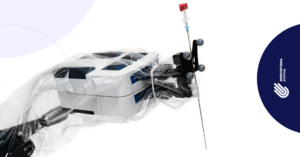
Currently, fluoroscopy, Computerized Tomography (CT), and ultrasound are used to support percutaneous needle interventions. However, they have some limitations. Fluoroscopy shows live images of bones

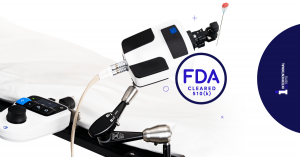
Interventional Systems announced Micromate™, the world’s smallest robot for percutaneous procedures, received its FDA 510(k) clearance, allowing the robotics company to operate in the USA.

Micromate™ Case Report series presents real cases performed by the physicians currently using the world’s smallest robot for percutaneous procedures. For this report, we’re following

We started this Value-Based Robotics series by analyzing the several barriers to the adoption of Robotics in Healthcare. Then, we highlighted the evidence on Micromate™’s

In what has been an unusual year for the MedTech industry, Micromate™ performed substantially well: unveiled to the world in Spring 2020, it obtained its

This week, we’re kicking off a new chapter in our blog: Micromate™ case report. We’re doing it because you can’t just talk the talk, you

We’ve been going on about Micromate and the future of medical robotics a little too much, haven’t we? Well, today, we’re gonna switch gears and

The fourth wave of surgery is upon us. Surgery 1.0 was open surgery; Surgery 2.0 was the introduction of minimally invasive techniques; Surgery 3.0 was