Why is there a shortage of CT contrast?
The COVID-19 pandemic continues to be the root cause of disruptions in the global supply chain.
This time, it led to the temporary shutdown of a production facility in Shanghai, creating a severe shortage of iodinated contrast media (ICM) and affecting imaging facilities – especially in the US, with the American Hospital Association expressing its concerns in a letter published earlier this month.
Although the facility has since reopened, the manufacturer still expects an 80% reduction in supplies through at least the end of June 2022.
What can radiology departments do about CT contrast supply disruption?
The current shortage of iodinated contrast media is pushing hospital radiology departments and imaging facilities to make emergency changes to their protocols and patient triage.
Some of the latest conservation strategies and recommendations (1, 2, 3) for the short-term response include:
- A quick assessment of contrast material inventories and monitoring of contrast use
- Reduction of individual contrast doses
- Delay of elective contrast-enhanced CT scans
- Use of alternative versions of contrast agents or alternative imaging modalities
How can we go beyond contrast conservation strategies?
Rationing is the common reactive response to any kind of shortage. However, there is another way to save on contrast without directly reducing doses: by avoiding repeats.
To minimize the need for a repeat exam, we must reduce motion artifacts. And to reduce motion artifacts, we must ensure the patient is immobilized – and stays immobilized – in the required position.
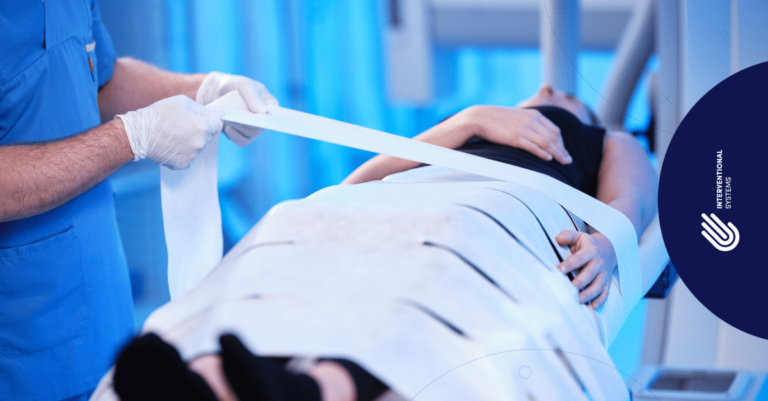
The iFIX system is designed for fast, hygienic, and exceptionally comfortable patient positioning and stabilization. Thanks to its super-strong, super-stretchy fleece, it can restrain motion effectively, reducing the likelihood of blurry images and the need for rescans.
By reducing the number of rescans, iFIX puts less pressure on CT contrast use, both for the short- and long-term.
Besides CT, iFIX is also compatible with Fluoroscopy, MRI, and Ultrasound, and its fleece and anchor combination adapts to all anatomies and body sizes.