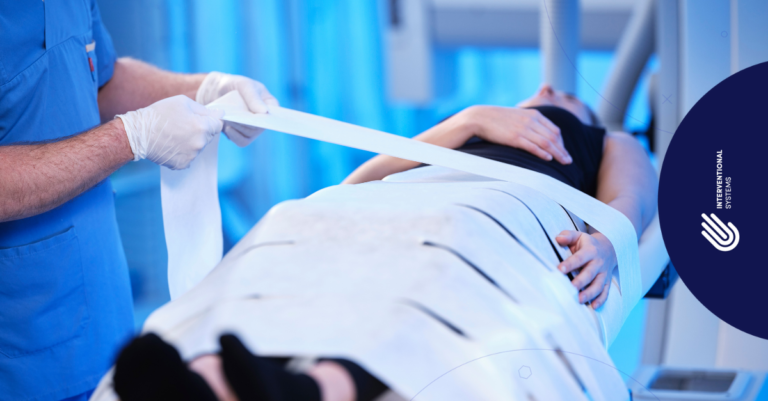
We’ve been going on about Micromate and the future of medical robotics a little too much, haven’t we? Well, today, we’re gonna switch gears and have a deep look into iFIX, our patient stabilization product.
Back to Basics: What is iFIX, our patient stabilization product?
Patient stabilization is not easy; worse than it not being easy, though, is the fact that it is uncomfortable for patients and – let’s face it – unhygienic.
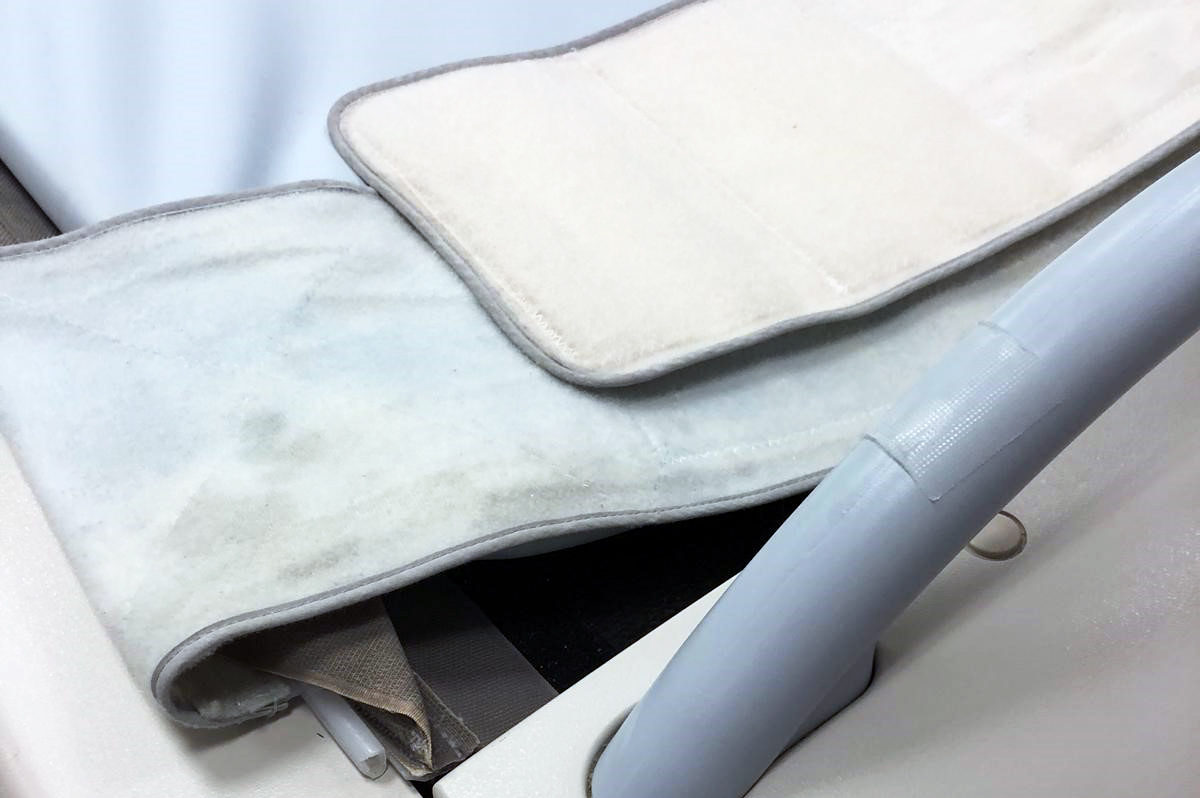
Currently, hospital straps are not only uncomfortable, they’re also highly unhygienic.
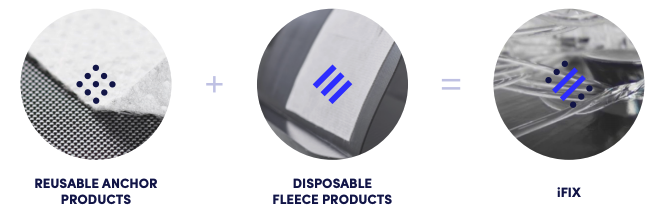
iFIX uses a two-part mechanism: an anchor product attaches to any type of medical table (either through table adapters or patches) and a super-strong, super-stretchy fleece adheres to your anchor product of choice.
And, yes, it is that strong – a 50cm fleece attached to a 50cm patch can hold more than 220 lbs. A human can barely apply a force higher than this in a laying or sitting position.
Plus, you can use the anchor parts up to 1000 times without losing grip after disinfection; the fleece, though, can only be used once and its cleanliness is equivalent to what can be found in ORs, making for a highly hygienic medical practice. Unlike what happens with straps, with iFIX, you don’t reuse any of the parts touching the patient’s body.
Also, the iFIX fleece is 100% biocompatible and it comes in a series of shapes and sizes to fit your specific needs. It’s quite literally head-to-toe patient stabilization.
As for the medical applications, you can use iFIX in the ER, for diagnostic purposes, in interventional radiology and even in surgery – the fleece can be cut up to meet your surgical needs.
What iFIX looks like in a real-world setting
iFIX’s clients spread from Europe to the US via a series of distributors. These distributors sometimes share anecdotes about the way teams all around the world use iFIX. Let us share a recent one.
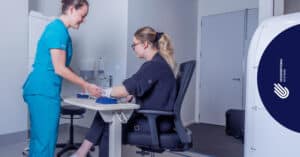
Our French distributor, KerTech, reached out to us with a special patient case: a 12-year-old that had to undergo a renogram using Lasix.
This meant this teenager had to lie still for 60 minutes. Anyone that has ever been around a 12-year-old knows how hard it is to pull off this sort of miracle.
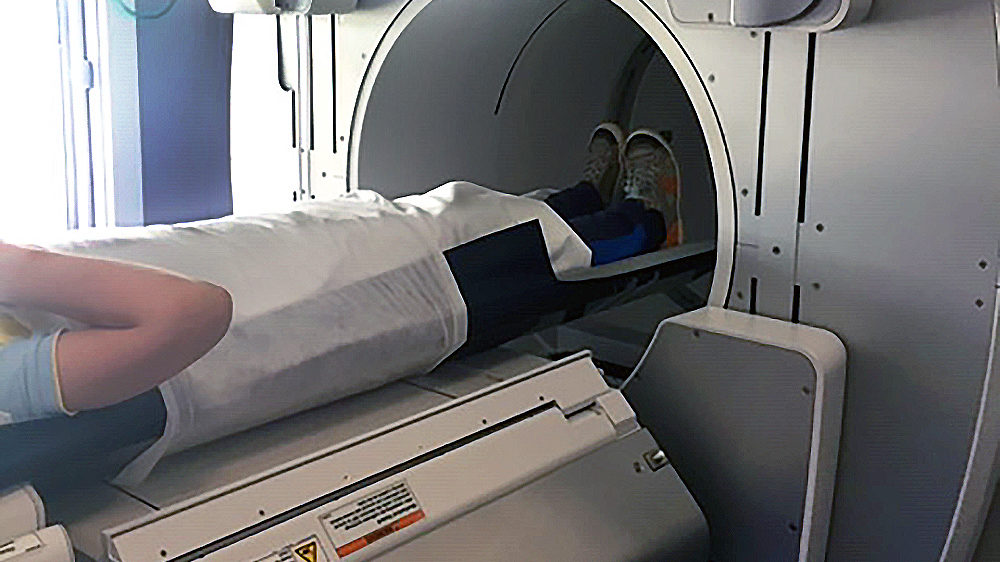
They used iFIX to keep the little patient still. Not only was this a more comfortable experience for the 12-year-old, it also made for a consistent image capture throughout the entire procedure.
This is another advantage of iFIX: it practically eliminates the need for rescans, saving hospitals a lot of money.
So, if you need a stabilization product that is comfortable for the patients and more hygienic for everyone, reach out to us.