A new multisociety Delphi consensus on procedural and practice standards for liver tumor thermal ablation, published in The Lancet Oncology, directly addresses robotic and stereotactic guidance. For interventional radiologists working with these tools, or considering them, the results are worth unpacking.
What reached consensus
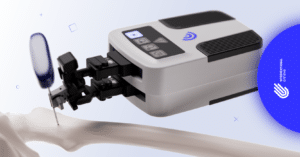
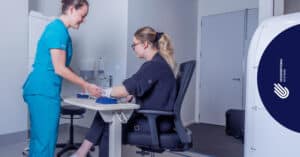
The panel agreed that robotic and stereotactic systems improve applicator placement for complex trajectories, including double-oblique approaches, and can assist with multi-needle and multi-applicator ablations. On patient positioning, two points were confirmed: positioning should be optimized to facilitate access to the target lesion, and immobilization is important to reduce motion and maintain procedural accuracy. Both bear directly on the reliability of any guidance system, robotic or otherwise, and on the positioning tools that support them.
What did not reach consensus, and why
Whether robotic systems are preferred to manual placement, offer better applicator accuracy, improve margin coverage, or reduce procedure time in multi-needle cases did not reach consensus. The document is transparent about the reasons: limited personal experience among participants, the relative immaturity of current evidence, and the absence of a clear link between targeting accuracy metrics and long-term clinical outcomes. The panel did acknowledge published studies reporting targeting errors below 5 mm and meta-analyses showing superior accuracy for robotic over manual needle placement.
Micromate™ in action: consensus and beyond
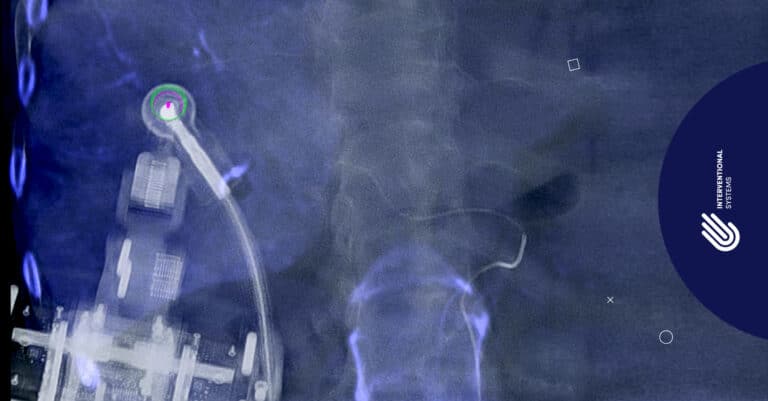
Dr. Marco van Strijen (The Netherlands) describes one of the steepest approaches he had performed: a superficial colorectal cancer metastasis just below the rib cage, reached via a horizontal approach that held the needle for the duration of a 60-watt, 5-minute microwave ablation with no significant skin tension.
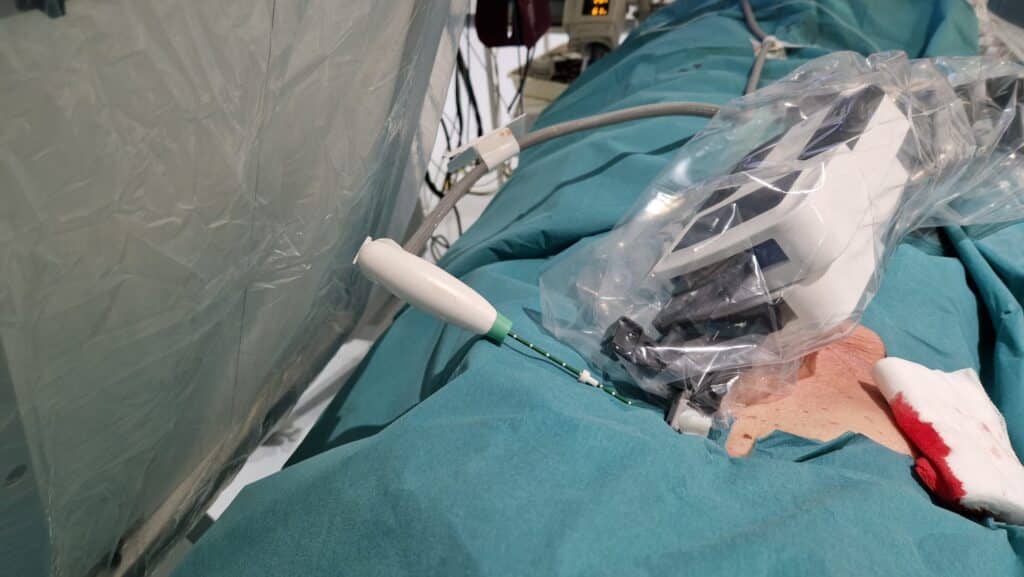
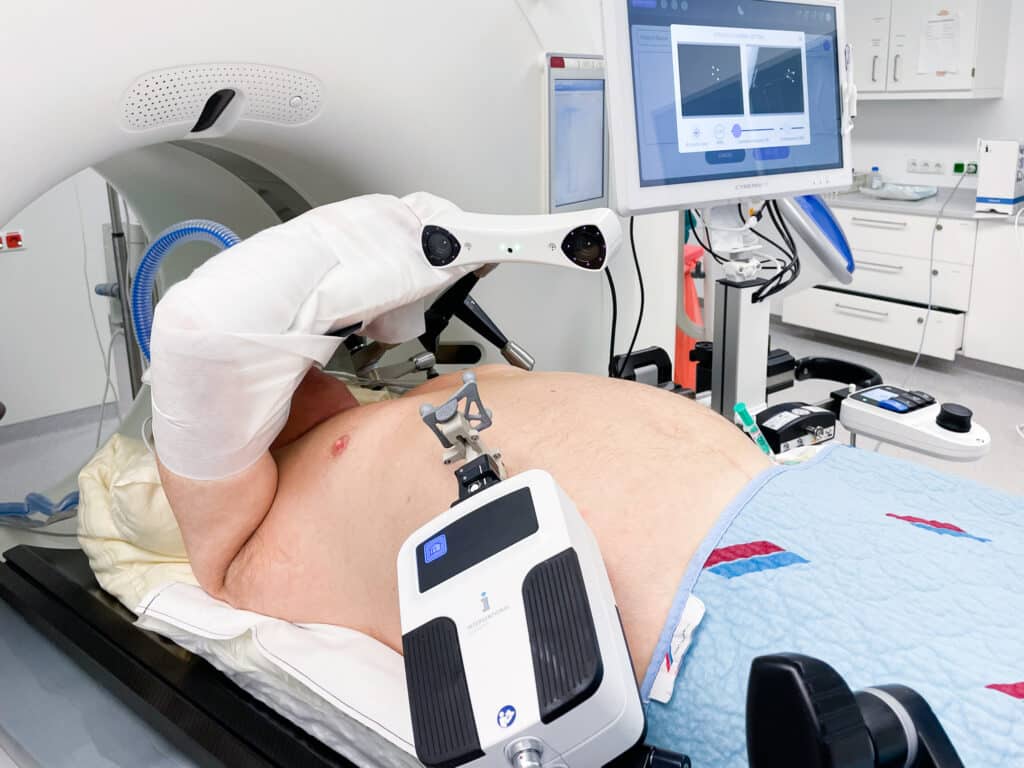
Dr. Alexander Kupferthaler (Austria) reports two liver ablation cases. In the first, under CBCT guidance, Micromate’s live imaging capability allowed real-time compensation for target displacement during a liver metastasis ablation where the lesion was barely detectable due to tissue texture. In the second, under CT, the system assisted in planning and executing an off-plane oblique approach in less time than a conventional workflow would have required.
On needle adjustments, our clinical trial recorded a readjustment rate of 0.13 ± 0.45 times per procedure.
Closing the access gap
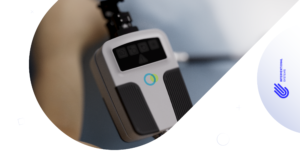
The consensus panel noted that uptake and access to emerging technologies remain uneven across practice settings. Cost is part of the reason, but so is the practical barrier of adopting a new system into an established workflow. The Micromate subscription addresses the first: a fixed monthly fee, no mandatory service agreements, no capital procurement process. The second informed how we built the system to fit existing practice, require minimal training, and need no clinical support specialist present. More physicians using robotics means more patients benefiting from it.