

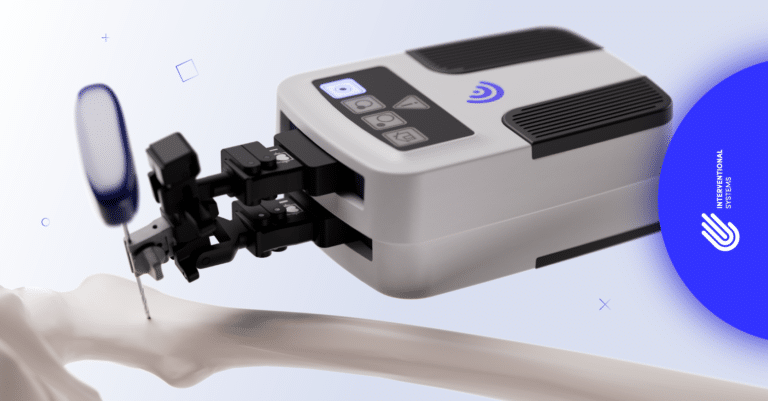
Image-guided, percutaneous bone procedures bring a set of challenges that show up case after case. Interventional radiologists and surgeons have learned to work around them by hand, at the cost of increased procedural time, increased radiation exposure, and reduced accuracy.
This is where robotic assistance acts as a steady third hand, bringing the stability needed to stay on target, without asking physicians to change how they already work.
Staying on target
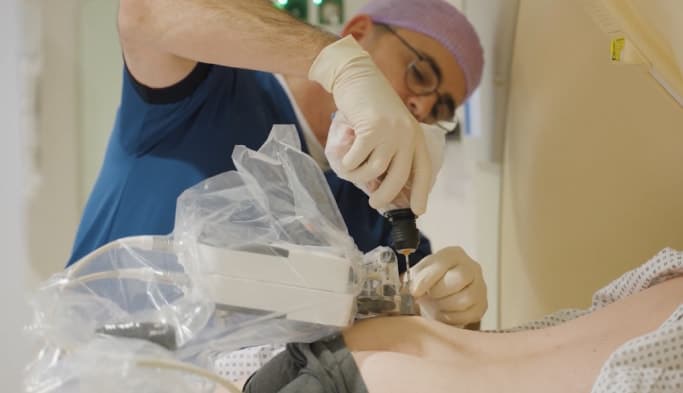
Freehand needle placement on bone has nothing to anchor against at first contact. Bone surfaces curve, and the needle tip can slide before it penetrates. Small hand corrections at this stage tend to add error, not remove it. Then, once the needle is in, a few degrees off axis at the beginning can turn into a large miss by the time the needle reaches depth, whatever is driving the advancement: continuous drilling, hammering, or the switch from a pilot hole to the instrument that follows.
Bone itself isn’t consistent. Dense bone resists the needle, and more force is needed to move it forward; force that isn’t aligned with the axis becomes lateral movement. Some bones do the opposite: ribs are thin and flexible, and can shift as the needle approaches, raising the risk of the needle sliding off the surface, especially close to the lung in the narrow space between ribs. These approaches are often oblique, which adds another way for the needle to drift.
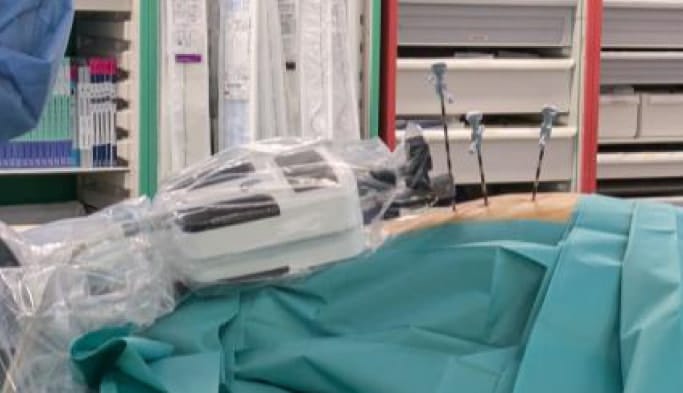
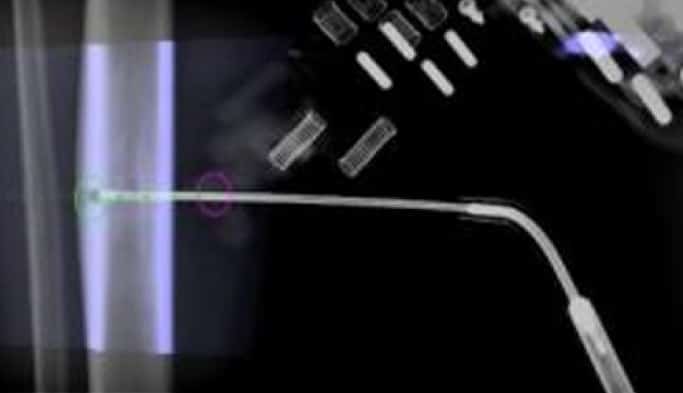
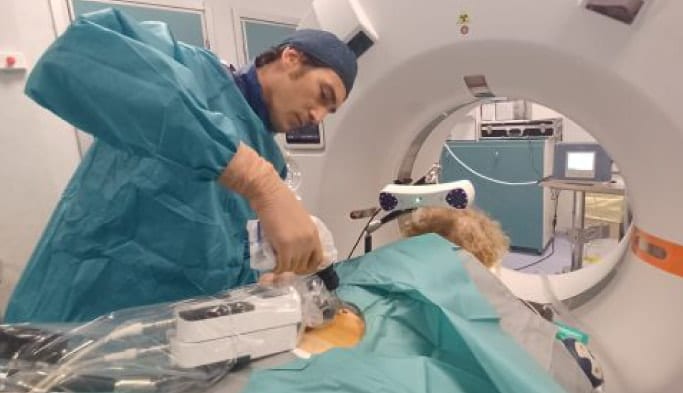
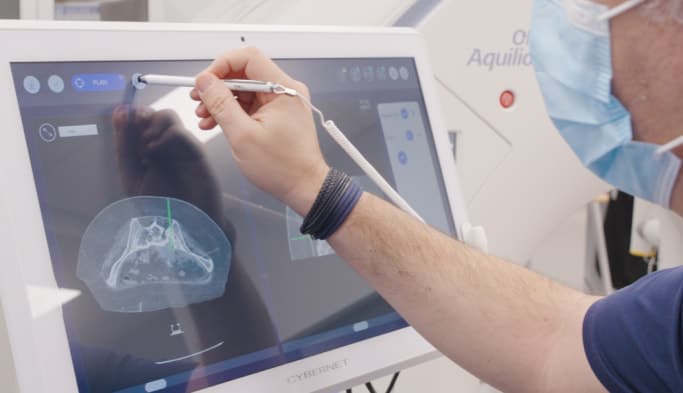
Micromate addresses this diretly: it fixes the trajectory before the needle touches bone and holds it accurately through the full advancement. Whether the approach is a straight pass through dense vertebral bone or an oblique line into a flexible rib, the needle reaches depth on the planned trajectory. It’s the combination of stability with accuracy that makes needle placement repeatable case after case.
Stability carries into retraction too, which matters beyond just hitting the target. Tumor seeding along the needle path is a recognized concern in biopsies close to the lung, ribs, or pelvis, and oncologic surgeons often resect the entire biopsy track during later surgery because of it¹. Coaxial needle positioning and fewer needle passes are part of how that risk is managed, and Micromate supports both: higher accuracy means fewer to no readjustments along the way.
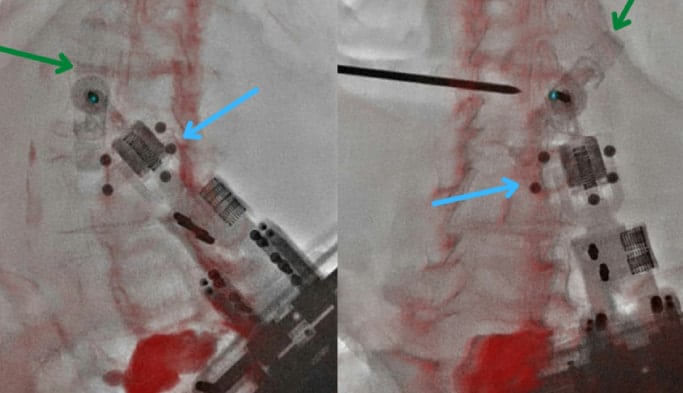
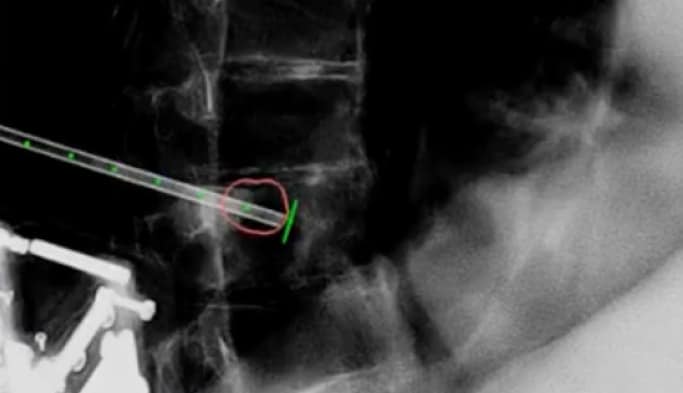
CBCT-guided, Micromate-assisted procedures
Vertebroplasty
Osteoid Osteoma Cryoablation
L3 transpedicular access
Iliac Crest Biopsy
T9 Vertebral Biopsy
Rib Biopsy
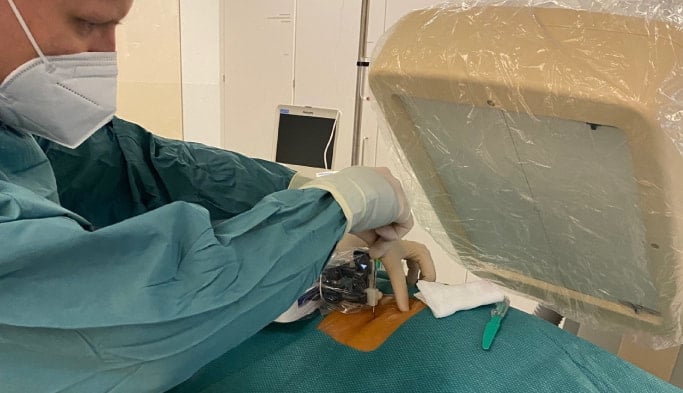
Fitting the clinical workflow
How physicians work varies, and so does what each case demands. A tool that can’t adapt to either adds friction instead of removing it.
Physicians also differ in how they advance the instrument, continuously or by hand, particularly in harder cortical bone where a drill can get stuck rather than cut through cleanly. Micromate doesn’t choose between them. The decision stays with the physician, and the same stability applies either way.
Instrument choice varies too. Bone procedures often call for heavier gauges than soft-tissue work, cannulas, osteotomes, and probes larger than a typical biopsy needle. Micromate holds needles and instruments from 9G up to fine 21G, and its stability doesn’t change with the size or weight of what’s mounted.
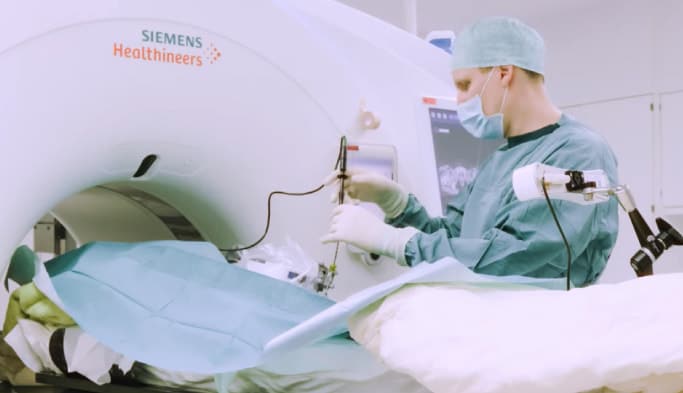
Imaging varies by case as well. Some approaches rely on fluoroscopy, others on CT, and some need both within the same procedure. Micromate works across CBCT, CT-fluoro, and CT, so physicians aren’t restricted to one modality or forced to plan the case around the system.
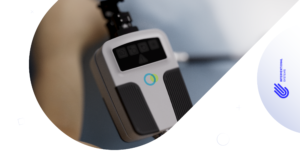
Setup follows the same principle. Micromate is a small, table-mounted robot that fits any standard tables, and its navigation camera, when used, is table-mounted too. It doesn’t need a dedicated room, and most teams reach proficiency within a few cases.
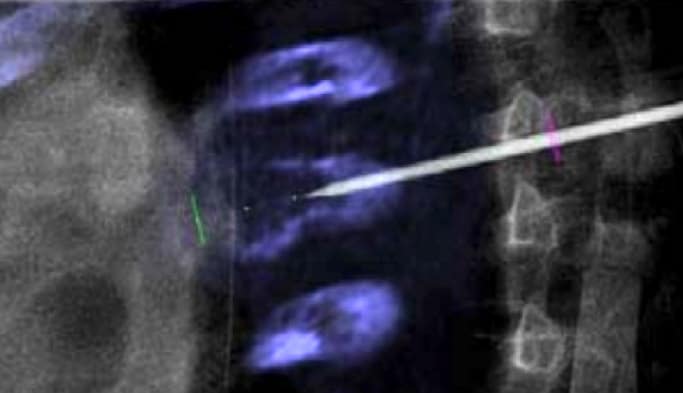
CT-guided, Micromate-assisted procedures
MW Ablation combined with Vertebroplasty
Osteoid Osteoma RF Ablation
Pelvic Biopsy
Presacral Area Biopsy
Bone work will always carry some risk of drift under force. Robotic assistance doesn’t remove that risk. It gives physicians a steady, accurate and repeatable answer to it, one that holds regardless of gauge, technique, or experience.
This adaptability reaches beyond interventional radiology. Built on the same miniature robotic technology, ATEC’s Valence and SEMR’s Intelligent SpinePecker have launched commercially in spine surgery, and a partnership with Shoulder Innovations is extending it into shoulder arthroplasty, aimed at the ambulatory surgery center setting.