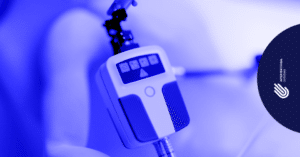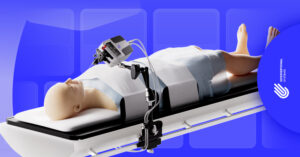

MARS Bioimaging has selected iFIX as the standard patient positioning system for its Extremity CT Imaging System, the first CT imaging system developed in New Zealand to receive FDA 510(k) clearance (FDA K252249). iFIX pairs a reusable anchor with a stretchy, biocompatible single-use fleece that contours to the patient like a second skin, holding the limb stationary throughout the scan.
The Extremity PCCT scanner acquires spectral data using Medipix photon-counting detectors, producing spatial resolution detail below 0.1 mm to visually differentiate bone, soft tissue, and metallic implants. At that resolution, longer scan acquisition times are needed for larger regions of interest, and even slight involuntary movement of a hand or wrist erodes the detail the technology exists to reveal. That made patient positioning a design requirement — and iFIX was selected to meet it.
In the MARS workflow, iFIX helps patients hold a relaxed position for the full scan, gives radiographers setup and release in seconds with minimal training, and requires no cleaning time between patients, lowering cross-contamination risk. That simplicity supports MARS’s broader goal of bringing photon-counting CT out of large radiology departments and into community and point-of-care settings, where fast setup and low training overhead matter as much as image quality. Fewer motion artefacts also mean fewer rescans — less repeat dose and less clinic time lost.
“At sub-0.1 mm resolution, the smallest movement is the difference between a diagnostic image and a repeat scan, especially on longer acquisitions. iFIX solves that without working against the patient or the radiographer — comfortable enough to hold still naturally, seconds to apply, and simple to keep hygienic in a busy clinic.”
Jenn Clark, Clinical Applications Specialist, MARS Bioimaging Ltd
The system is now in clinical use, with its first installation at Reform Radiology in Christchurch.